How can we get the best possible evidence for teacher observations and evaluations?
In this article, we’ll argue for a two-phase approach to collecting high-quality evidence of teacher practice: during an observation, we can record, take timestamped notes, and pay attention to what’s taking place in the classroom. After an observation, we can talk with the teacher and ask evidence-first questions to gain insight into the teacher’s thinking and professional judgment.
Most organizations take a more straightforward approach: they create a form.
Creating an observation form seems perfectly reasonable—why not ensure that all observers capture the same information in a consistent format?
A form’s greatest strength is also its greatest weakness: by determining in advance what’s worth documenting, forms ensure that a great deal of evidence is never captured at all.
By design, forms discard most information. They narrow the observer’s attention, focusing it on just a few key areas. If you want an answer to a specific question, a form isn’t a bad way to go—but the teacher observation and evaluation process benefits from rich, open-ended evidence of teacher practice.
And what if we need detailed information about every aspect of practice, as in annual evaluations? The most common solution is to simply make the form extremely long. But the longer the form, the harder it is to complete. No one observation can provide evidence for every evaluation criterion—and even if it could, filling out the form would prevent the observer from paying attention to the lesson.
When forms are necessary, they should be filled out after the observation—and after talking with the teacher. So how should we document teacher practice during the observation itself?
Assuming we meet with the teacher soon after the observation, we’ll be able to rely on memory to some extent, especially for the intangible aspects of the classroom—the energy, the feel, the climate.
As much as possible, though, we need documentation. A principal writing a final evaluation in April can’t simply argue that an observation in October felt “off.”
We know we can’t rely on memory alone, so most observers take notes. As with forms, though, the more of our attention we devote to taking notes, the less attention we’ll be able to devote to absorbing the lesson itself.
So we suggest a three-fold approach to maximizing evidence and attention:
Sometimes we’ll want to focus on listening to the teacher. At other times, we’ll want to jot down a few notes or move to the best vantage point in the room as the lesson unfolds. Sometimes we’ll want to look at student work, and we may even talk with students as the situation warrants.
Optimizing this mix is the key way observers exercise professional judgment during an observation. Since we can’t always know in advance what will be most worth our attention, the best plan is to ensure we’ll have a detailed transcript no matter how we spend our time.
Specific, factual documentation is helpful for the postconference, too. An observer with detailed notes about what happened can ask evidence-first, open-ended questions, like “I noticed that you made a note when Tyler was confused about the practice problem, but didn’t address it then. What went into your decision to move on, and what does the follow-up look like?”
Once we’ve equipped ourselves with plenty of evidence, how can we use it to help teachers grow?
Say the word "evidence" and most of us start thinking like a detective—we go to the scene, form a conclusion, and assemble evidence to support it.
This instinct isn't wrong, exactly. Sometimes we do need to determine whether a specific expectation was met, and the detective's rigor is genuinely useful.
But if that's the only mode we bring into a classroom, we turn every observation into an investigation, and we put every teacher on the defensive.
There's a different way to gather evidence, and it looks more like archeology.
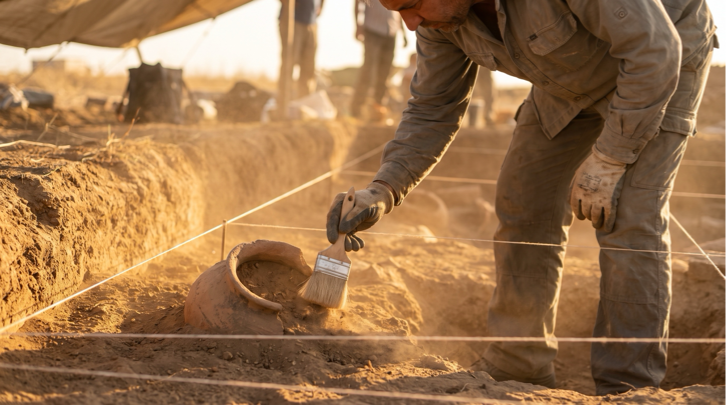
An archaeologist doesn't show up already knowing what they're looking for. Their job is to preserve as much as possible, because they don't yet know which piece—which shard, which fragment—is going to turn out to matter.
The paradigm isn't guilt or innocence. It's: What's here? What does this tell us? How might this change what we think we know? An archaeologist can dig up an enormous pile of dirt full of rocks and not know right away which ones matter historically. They have to gather first and interpret later, or they'll miss things by deciding too early what counts as significant.
Most teacher observation, as it's currently practiced, leans hard toward the detective. We show up looking for specific things, on a specific form, and whatever doesn't fit the form effectively disappears.
What we're arguing for instead is more archaeological: collect broadly, preserve what you can, and let the meaning-making happen later—ideally with the teacher sitting right there next to you, looking at the same pile of dirt.
But collecting better evidence is only worth the trouble if we can actually use it.
One reason video isn’t a universal part of teacher observation is that historically, it didn’t save observers time. Recording a lesson while you’re in the room takes almost no extra effort, but turning the recording into usable evidence has historically required hours of manual work.
Watching the video just once doubles the time commitment, and researchers typically allocate 8 hours for transcribing and coding each hour of classroom video against a rubric.
AI transcription and AI-generated reports change the equation dramatically: essentially zero additional time to get a transcript, zero additional time to get an analysis run against a framework, and a few minutes to review what came back.
Suddenly, observations shift from a labor-intensive process of mining a few formal observations for as much evidence as we can, to a rewarding process that produces an abundance of evidence—so much that we can be selective about what we focus on. It’s the difference between a process we can realistically do once a year per teacher, and something we can do every week.
None of this works, though, if the underlying goal is still to catch people. Before you keep reading this series, you need to ask yourself if you agree with this fundamental statement: teaching is professional work, and professional work requires autonomy.
There's a study from 19861 that found teachers make roughly one interactive decision every two minutes of instruction. Multiply that across thirty teachers in a building and we get a number no single instructional leader could ever hope to manage directly. We don't have the time, and honestly, we shouldn't want to. The job isn't to make those decisions for people. It's to sharpen the judgment they're already using to make them.
We think about this on two dimensions—attention and control—using something we call the Autonomy Matrix.
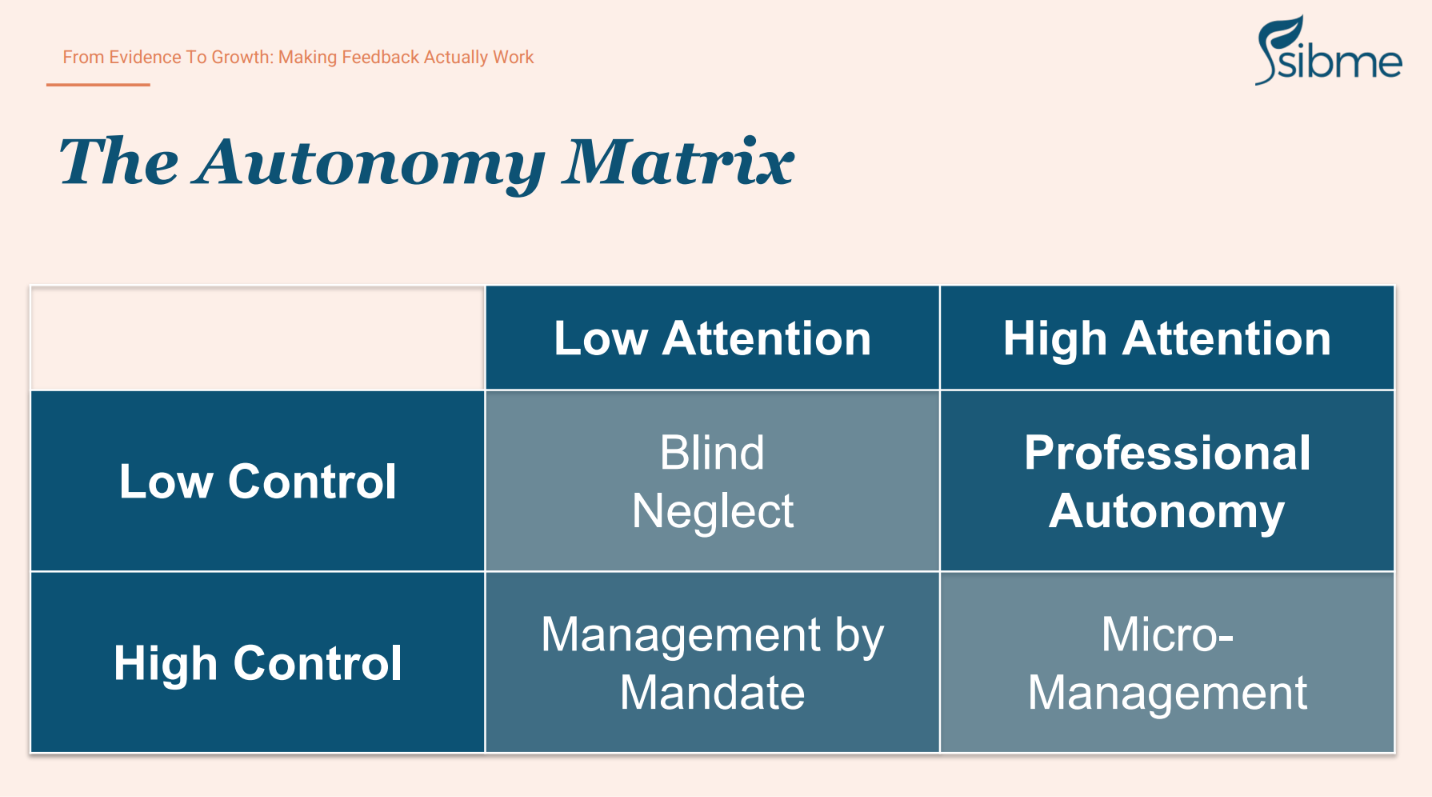
High control, low attention is management by mandate—a district saying "everyone will do it this way" and then walking away, which has its place for things like safety protocols, but is a poor fit for instructional practice.
High control, high attention is micromanagement, and if you've ever been on either end of it, you know how exhausting it is. Micromanagement requires the leader to do the teacher’s job and their own job at the same time, and it doesn’t develop the judgment teachers need to work as professionals.
Low control, low attention is blind neglect, and it's the one that hides best—because it often gets delivered as a compliment. "You're doing great, so I'm not going to worry about you" sounds kind. What it actually communicates is that you're not worth the attention.
The quadrant we're actually after—low control, high attention—is professional autonomy: real teacher ownership of practice, paired with real, sustained engagement from a leader who cares and is paying attention.
Getting into classrooms more often, recording more, capturing richer evidence—it’s not about micromanagement. It's about making sure the high-attention quadrant is where people actually live, instead of the neglect that gets mistaken for trust.
Start with evidence. Capture more than you think you need, because you don't yet know which piece of it is going to matter. Use recording to do what memory and note-taking can't, and let your own attention go toward the things only a human in the room can catch—the tone, the relationships, the moment that felt different for reasons you haven't put words to yet.
What we haven't talked about yet is what happens once you actually have that evidence. That's where things get harder, because evidence doesn't score itself, and the temptation to rate what you just saw—right there, on the spot, before you've had a chance to see the whole picture—is enormous. That's exactly where we're headed next: why scoring in the moment is a mistake, and what it looks like to evaluate practice with the full picture in view.
1 Clark, C. M., & Peterson, P. L. (1986). “Teachers’ Thought Processes In M. C. Wittrock (Ed.), Handbook of Research on Teaching (3rd ed., pp. 255–296). Macmillan.
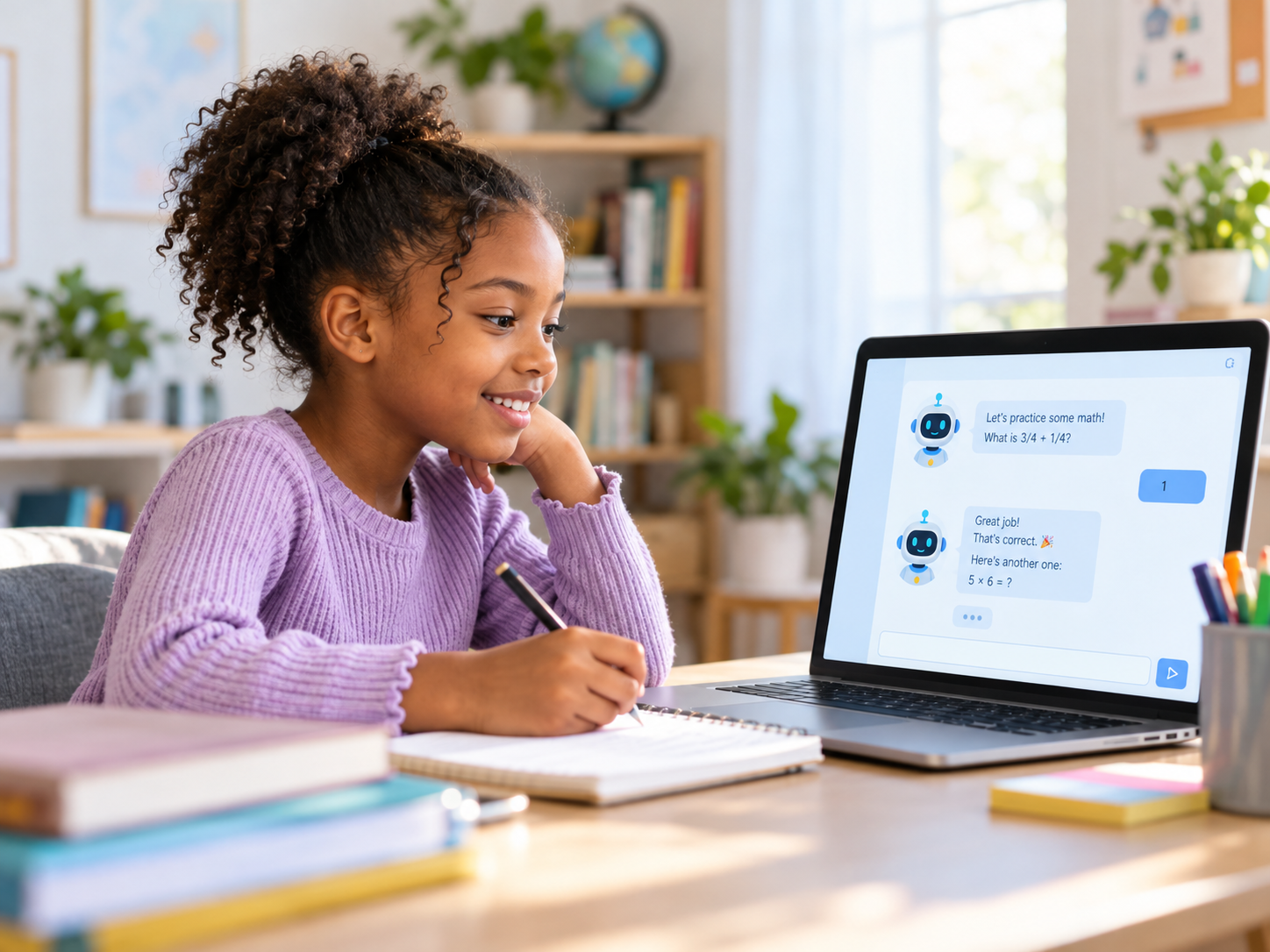
New research suggests the best AI tutors don't do the work for students. They create more chances for students to do it themselves, and catch the mistakes along the way.
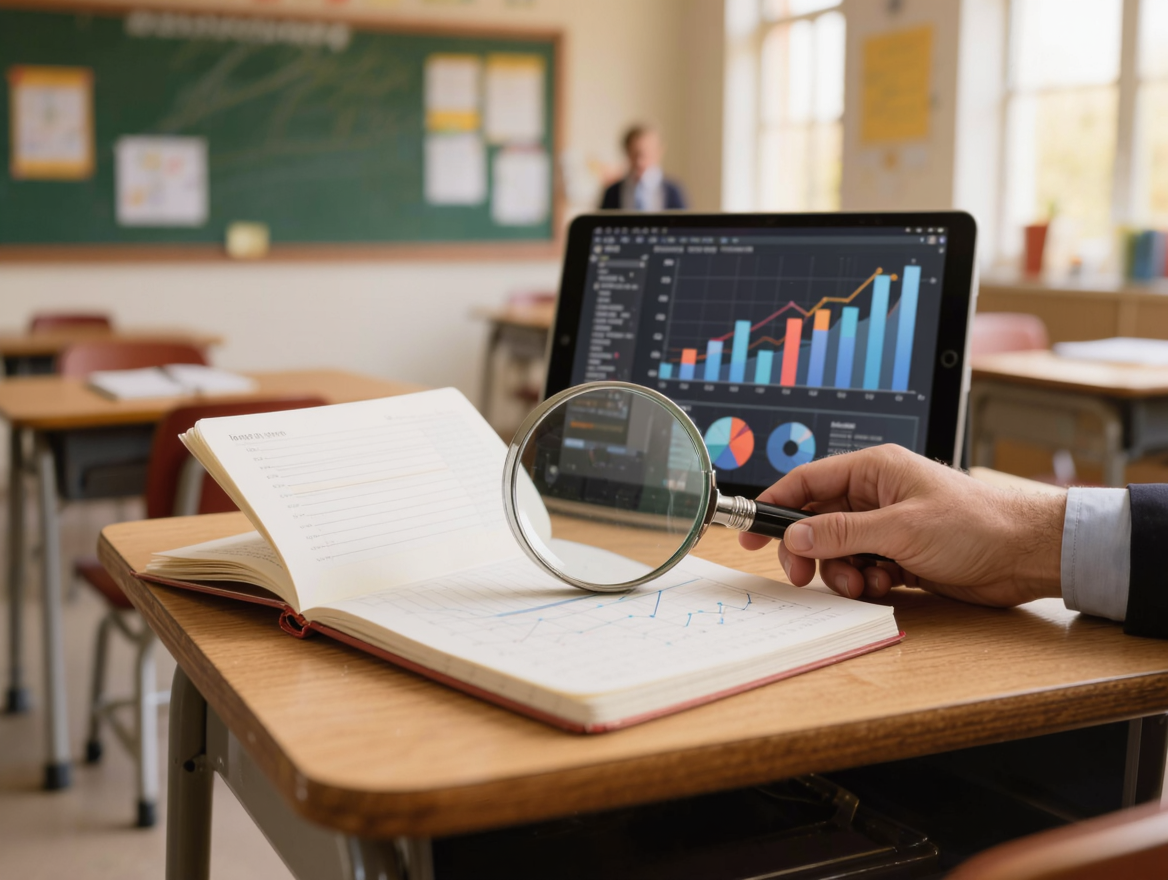
The most valuable thing about an AI walkthrough isn't that it's smart. It's that it walked into the classroom with no history, no grudge, and no favorites. Here's how to make that work for you — without ever letting it off the hook.
.jpg)
While AI adoption is widespread in education, relying on AI detectors is failing and fueling an atmosphere of distrust. The deeper threat is "cognitive surrender"—where students lean on chatbots at the first sign of struggle—combined with a massive support gap for teachers who lack adequate guidance. Rather than policing students, the path forward involves focusing on active, observable learning processes, encouraging human connection, and giving educators collaborative tools like Sibme to reflect on and improve their teaching practice.
The instructional evidence platform for K–12 districts.