The most valuable thing about an AI walkthrough isn't that it's smart. It's that it walked into the classroom with no history, no grudge, and no favorites. Here's how to make that work for you — without ever letting it off the hook.
READ MORE
.jpg)
While AI adoption is widespread in education, relying on AI detectors is failing and fueling an atmosphere of distrust. The deeper threat is "cognitive surrender"—where students lean on chatbots at the first sign of struggle—combined with a massive support gap for teachers who lack adequate guidance. Rather than policing students, the path forward involves focusing on active, observable learning processes, encouraging human connection, and giving educators collaborative tools like Sibme to reflect on and improve their teaching practice.

A university researcher's new argument about what gets lost when AI takes over parts of teaching turns out to be a preview of a debate we're already having about teacher coaching.

Schools can't just teach kids to understand AI — they have to teach kids to recognize their own agency in the relationship with it, because literacy alone won't settle the question this week's AI-safety debate couldn't.
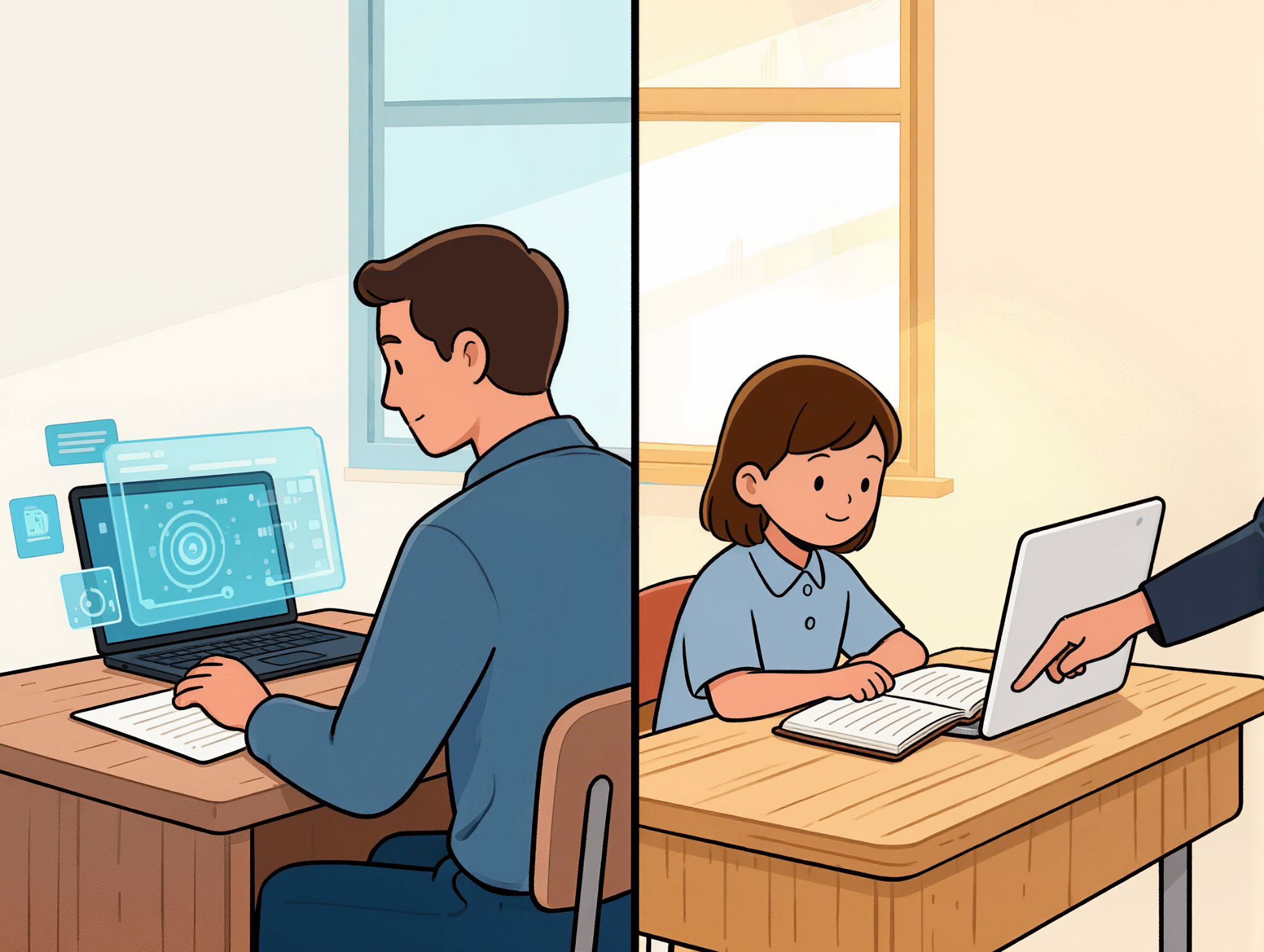
NYC's new AI ban gets the student-facing/teacher-facing distinction right in principle, but its blanket approach — and the risk of leaving kids with zero AI literacy for a full year — shows why school AI policy needs more nuance than an on/off switch.
Part 3 of The Evidence-First Observation, a three-part series on new ways to observe teachers in the age of AI.
Part 2 of The Evidence-First Observation, a three-part series on new ways to observe teachers in the age of AI.
The instructional evidence platform for K–12 districts.