I want you to imagine two apprentices at the same workshop.
The first apprentice gets very good, very fast, at the repeatable stuff. Measure the board. Cut the board. Sand the board. Do it again. She's efficient. She's reliable. She never complains.
The second apprentice is slower to pick up the repeatable stuff, but she's the one the master craftsman keeps pulling aside to ask, "What do you think is wrong with this joint?" She notices when the client's request doesn't match what the client actually needs. She catches mistakes nobody told her to look for.
Guess which apprentice still has a job when the workshop buys a machine that measures, cuts, and sands.
That's not a hypothetical anymore. That's the labor market, right now, and we finally have the data to prove it.
Layoff trackers now put AI-cited job cuts at over 100,000 workers in just the first half of 2026 — roughly a quarter of every layoff announced in that window. Oracle cut 21,000 jobs, 13% of its workforce, and said so directly in a regulatory filing. Cisco, PayPal, and Atlassian have all made the same admission. Not "market conditions." Not "restructuring." AI.
Here's the part everyone stops reading before they get to: which jobs, exactly?
Researchers at Stanford's Digital Economy Lab dug into that question and found a clean, almost tidy split. Employment is shrinking in occupations where AI automates the task — takes it over, start to finish. Employment is holding steady, or growing, in occupations where AI augments the person doing it — makes them faster, sharper, better, without replacing their judgment.
Automate. Augment. One word apart. Completely different future.
I get why it's tempting to wave this off as "the tech sector's problem." It isn't. Finance is already being flagged as the next front, precisely because so much of the work there is automatable task volume dressed up as expertise. And the uncomfortable truth is that a lot of what we teach — a lot of what we test — trains kids to be the first apprentice. Measure the board. Cut the board. Give me the answer, in the format I expect, the way I taught you to produce it.
We built a system optimized for exactly the skills a model is best at replicating. That's not an insult to teachers. It's an indictment of what we've been asked to optimize for.
So what do we actually change on Monday?
Not everything. One thing, done well, beats everything, done half-heartedly.
Stop treating "AI fluency" as the finish line. Knowing how to use the tool isn't the differentiator anymore — the automatable jobs use AI tools too. The differentiator is judgment. But "judgment" is a word we throw around without ever teaching it, so let's break it into pieces a lesson plan can actually hold.
There's epistemic judgment — deciding what's true. Can a student weigh evidence, size up a source's credibility, tell a real expert from a confident amateur, spot an argument that sounds airtight but isn't? In a world of misinformation, conspiracy thinking, and people sorting themselves into tribes by what they're willing to believe, this isn't a media-literacy elective anymore. It's survival.
There's elegance judgment — recognizing a good idea when you see one. This is taste, and yes, taste can be taught. The clean proof instead of the clunky one. The explanation that makes something click instead of the one that just restates it louder. The simple model that captures more than the complicated one. Every discipline has its version of this, and every discipline can teach students to notice it.
And there's practical judgment — deciding what to do. This is the oldest of the three, what Aristotle called phronesis: the wisdom to act well when the rules conflict, the information is incomplete, and nobody can tell you the outcome in advance. Ethics. Leadership. Civic life. No rubric survives contact with the real version of any of these.
None of the three shows up on a standardized test. All three show up in a career.
Protect the parts of your curriculum that are hardest to automate — and stop apologizing for how messy they are. The debate that doesn't have a clean rubric. The project where two students synthesize across three subjects and land somewhere the assignment sheet didn't predict. The conversation where a kid has to explain a decision to someone who disagrees with them. If a task can be fully specified in advance, a model will eventually learn to do it. If it requires reading a room, that's still a human job. For now.
And say the quiet part out loud to your older students. This data isn't a reason to scare them away from finance, or tech, or any field. It's a reason to teach them to ask a sharper question before they pick a major or a first job: does this role sound like automation, or augmentation? That single question will serve them better than any list of "AI-proof careers" we could hand them — because those lists are already out of date by the time we write them.
This was never really a story about jobs disappearing. It's a story about which skills inside those jobs are disappearing — and which ones just became more valuable because a machine still can't supply them.
We get to decide which apprentice we're training. We can keep optimizing for the kid who measures the board fastest. Or we can build classrooms full of kids the master craftsman pulls aside and asks, "What do you think is wrong with this?"
That's the job that's still standing when the machine shows up. Let's teach like we know it.
This is part of Teaching in the Age of AI, a weekly digest of research and ideas for educators navigating AI in the classroom. Subscribe to get each week's post.
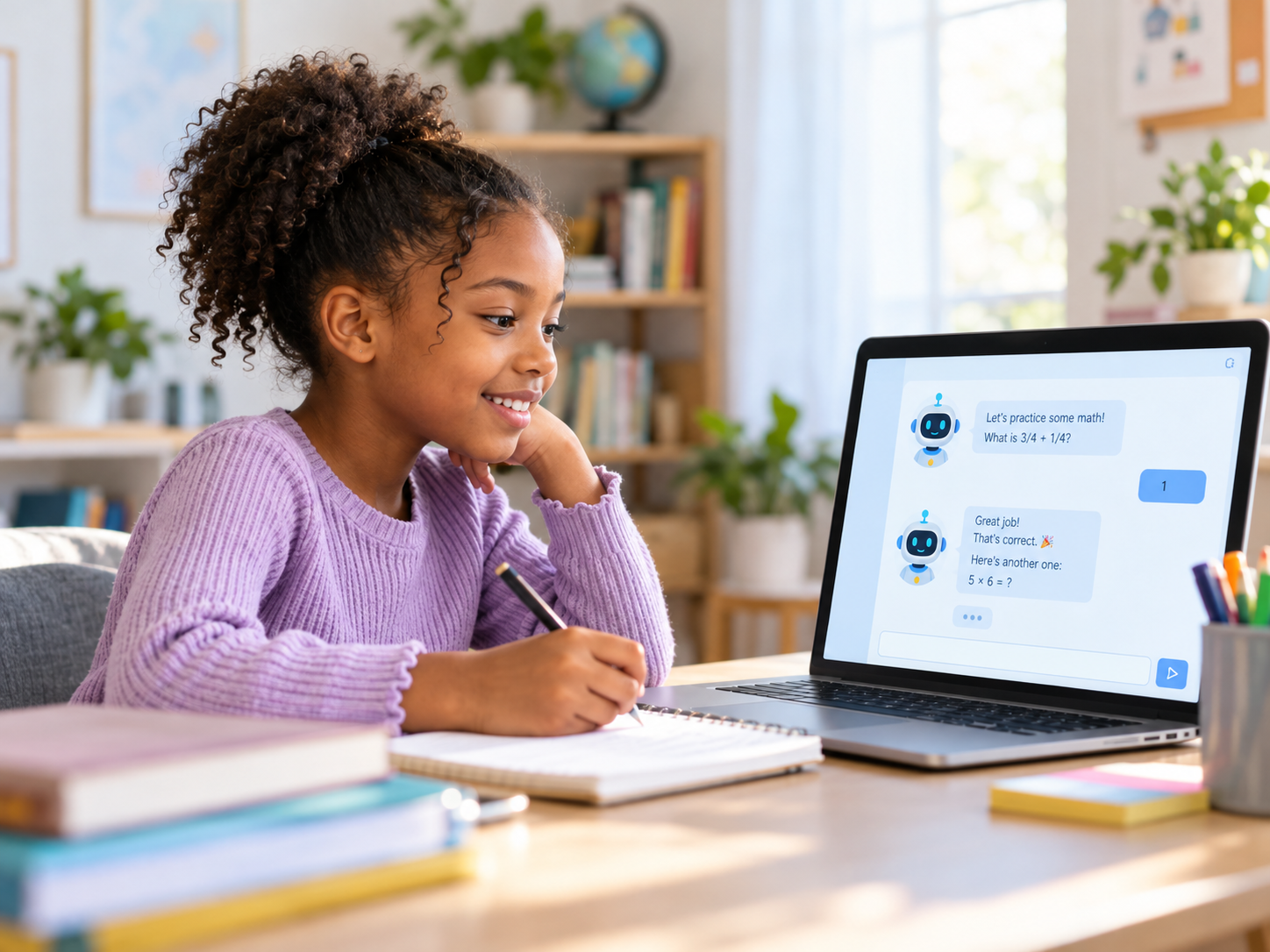
New research suggests the best AI tutors don't do the work for students. They create more chances for students to do it themselves, and catch the mistakes along the way.
The most valuable thing about an AI walkthrough isn't that it's smart. It's that it walked into the classroom with no history, no grudge, and no favorites. Here's how to make that work for you — without ever letting it off the hook.
.jpg)
While AI adoption is widespread in education, relying on AI detectors is failing and fueling an atmosphere of distrust. The deeper threat is "cognitive surrender"—where students lean on chatbots at the first sign of struggle—combined with a massive support gap for teachers who lack adequate guidance. Rather than policing students, the path forward involves focusing on active, observable learning processes, encouraging human connection, and giving educators collaborative tools like Sibme to reflect on and improve their teaching practice.
The instructional evidence platform for K–12 districts.