New York City's new AI moratorium bans student-facing generative AI through eighth grade — but teachers can still use AI to draft lesson plans, check rubrics, and build materials. That's a meaningful distinction, and it's worth sitting with, because "student-facing AI" isn't one thing. A companion chatbot a child talks to like a friend is not the same as a reading app with a light AI-personalization layer, which is not the same as a math tool that adapts problem difficulty based on a student's answers. The policy treats all of it as a single category to switch off. That's the part worth examining.
The policy, which the mayor's office is calling the broadest such moratorium in the country, isn't really about AI in general — it's about who's on the other end of the interaction. But according to Chalkbeat's reporting, the specific tools affected and how enforcement will actually work remain unclear even as the school year begins. City officials have acknowledged they don't have solid data on how much AI is already embedded in the products the district's 1,600 schools have purchased.
That gap matters, because it's where the student-facing/teacher-facing line starts to blur in practice. A lot of "teacher-facing" tools quietly generate content that ends up directly in front of kids — an AI-drafted worksheet, an AI-flagged reading level, an AI-suggested intervention. The line the policy draws is conceptually sound. Operationally, nobody seems to have mapped it yet.
There's real wisdom in refusing to let young children be taught by a chatbot instead of a person. Early literacy and math instruction depend on relationship, tone, patience, and the kind of moment-to-moment judgment a five-year-old's teacher makes that no current AI system reliably replicates. If some of the 40-plus tools being pulled were, as critics have suggested, dressing up rote drilling as "personalized learning" via a chatbot interface, removing them is a reasonable correction — not a rejection of technology, but a rejection of a specific bad pattern: outsourcing the relational part of teaching to software.
Treating teacher-facing AI differently is also right. A teacher using AI to draft a first pass at a lesson plan, or to help spot patterns across a stack of essays, is still the one making the pedagogical judgment call. That's a fundamentally different risk profile than putting a chatbot directly in a seven-year-old's hands.
But a blanket, district-wide pause — even a one-year one — treats "AI in the classroom" as a single dial to turn off, when the reality is a spectrum of tools with wildly different risk levels. A vocabulary app with a light AI-personalization layer is not the same thing as a companion chatbot. Lumping them together, as this policy does by design, is easier to enforce and easier to announce at a press conference — but it isn't the same as good regulation.
The bigger risk is what happens to kids in a fully AI-free environment for a full year while the rest of the world doesn't pause. Students who get zero structured, supervised exposure to how these tools work — their strengths, their failure modes, the fact that a chatbot's confident answer can simply be wrong — aren't protected by that absence. They're just delayed in developing AI literacy, and they'll eventually have to catch up on their own, probably with less guidance, not more. A head-in-the-sand year doesn't neutralize AI's presence in these kids' lives outside school; it just cedes that education to whoever they encounter first outside a classroom.
If you're teaching in a district watching NYC closely — and many are — the takeaway isn't "ban it" or "embrace it," it's "get specific." Three questions worth raising in your own building this year: What does our AI tool inventory actually look like, tool by tool, rather than as one category? Where is AI already invisibly embedded in the products we've purchased, teacher-facing or not? And what's our plan for building AI literacy in students during a moratorium, so "banned" doesn't quietly become "ignored"?
The instinct to protect young children from being taught by machines is the right one. But regulation that can't tell the difference between a companion chatbot and a lightly AI-assisted spelling app isn't protecting kids from AI — it's just protecting policymakers from having to make harder distinctions.
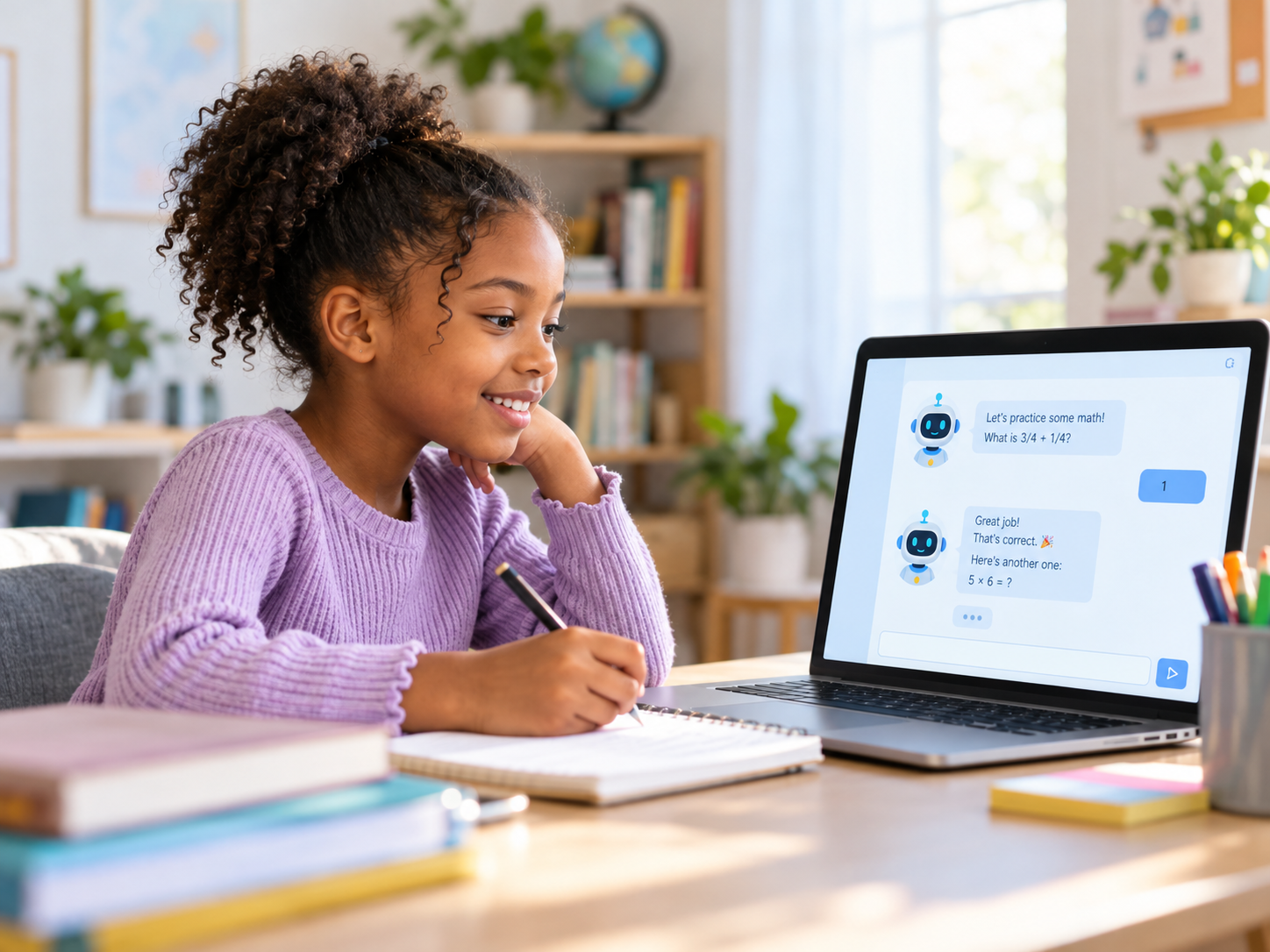
New research suggests the best AI tutors don't do the work for students. They create more chances for students to do it themselves, and catch the mistakes along the way.

The most valuable thing about an AI walkthrough isn't that it's smart. It's that it walked into the classroom with no history, no grudge, and no favorites. Here's how to make that work for you — without ever letting it off the hook.
.jpg)
While AI adoption is widespread in education, relying on AI detectors is failing and fueling an atmosphere of distrust. The deeper threat is "cognitive surrender"—where students lean on chatbots at the first sign of struggle—combined with a massive support gap for teachers who lack adequate guidance. Rather than policing students, the path forward involves focusing on active, observable learning processes, encouraging human connection, and giving educators collaborative tools like Sibme to reflect on and improve their teaching practice.
The instructional evidence platform for K–12 districts.