When I first started teaching literature to English Language Learners back in 2004 I was an idealistic recent college grad with a full head of hair and more energy than I'll ever have again. Oh, how I miss those days molding young minds.
You know one thing I won't miss? Classroom observations.
At my school, classroom observations happened around the same time every year. Usually, they were unannounced, but for the most part, you could anticipate the general time-frame when they would occur.
There was always more chatter in the faculty lounge during observation season. It was abuzz with disgruntled teachers complaining about their observation scores. The snarky chatter was contagious and it would bait even the most idealistic of rookie teachers into participating in the watercooler conversation.
And it went something like this:
"Mr. AP hasn't taught in over a decade and only spent 3 years in the classroom. He couldn't hack it so he went to the dark side. The guy knows nothing about my content let alone my teaching… 'Below Expectations!' I just know he's out to get me. He wants me out of this building for holding my students to high standards!"
"If you want Proficient or Exceeds Expectations on your observations you need to play the game with a dog and pony show and pass all your students like me."
As an ACP teacher on probation, I bit my tongue and didn't respond. But the grizzly veteran had a point. Why was his professional practice being evaluated by someone who didn't have the expertise to judge it, let alone decide the fate of his career?
I vividly remember my first experience with the painful PDAS appraisal process. I somehow "lucked out" and was assigned to my principal. While I was clueless about teaching and a terrible classroom manager, I vowed to never score a 1 or 2. Unsatisfactory and Below Expectations were simply unacceptable for this high achiever.
So, what does any overachiever do in this situation? They over-prepare.
I scripted out the most masterful lesson with "realia" — objects from real life used in classroom instruction to improve students' understanding of other cultures and real-life situations. I rehearsed the lesson repeatedly in front of the mirror until I built up enough muscle memory to execute it in my sleep. Shamelessly, I stored the realia and lesson in a brown paper bag in my classroom, so on a moment's notice when my principal walked in, I could throw out the half-baked disaster I was teaching at the time and pivot to the "observation lesson."
When that day finally arrived, I was prepared. I heard a walkie-talkie go off outside my classroom door. Jose, a student in my class, yelled "She's here!" as if I didn't notice. She walked in with a clipboard and notepad in hand and sat down at my desk. Immediately, I shifted into observation mode. It was time to win that Oscar.
The lesson couldn't have gone any better. It was a performance for the ages. My students were well-behaved, engaged, and participated when needed. They were supporting actors in my well-orchestrated lesson. Maybe I missed my calling and should've gone to Hollywood after graduation.
During my post-observation conference, my principal told me there was "real learning happening in my classroom" and that she had never observed a rookie teacher as good as me in her career. Her rubric checklist confirmed I was proficient and exceeded expectations in all categories. My ego was through the roof. I believed I had achieved Jaime Escalante status in my first year of teaching.
Unfortunately, the classroom observation process I experienced that day has not changed much. In fact, my colleague Allyson Burnett, a veteran educator of 40+ years, told me that the observation checklists used in the 1970s weren't all that different from the observation instruments we use today.
Imagine that. Over 40 years in the profession, and the most innovative incremental improvement to the classroom observation process was the invention of the personal laptop so an appraiser could type their notes instead of handwriting them on a notepad. Even still, many observers still scribe with pen and paper today.
The real problem is that the observation process I encountered as a teacher did not help me improve my practice. It may have even harmed my development as a young teacher and created unnecessary anxiety. Yet most schools and districts still spend hours of wasted time and energy doing them.
Here are five reasons why traditional teacher observations rarely improve teacher practice.
1. They're usually compliance-driven
For some reason, legislators, districts, and teachers' unions have determined that the best way to evaluate a teacher's performance is to observe instruction within a regimented, formulaic process. Appraisers follow a uniform protocol of look-fors and checkboxes and ultimately assign a subjective score to elements of the lesson. Within this process, the primary goal is to complete the protocol — not to improve teacher practice.
2. They're too infrequent to matter
On average, a teacher teaches 76,500 minutes in a school year. An administrator might observe an average of 40 to 90 minutes of instruction per teacher per year — roughly 0.0012% of a teacher's body of work. This is an incredibly small sample set that would make any scientist cringe. How can an appraiser draw a meaningful conclusion from such a tiny fraction? The answer is, they shouldn't. Garbage in, garbage out. This is especially problematic for good teachers. If they had a bad day during their observation, they missed their only opportunity to demonstrate the true reality of their classroom.
3. The focus is too broad
Too often during classroom observations, the observer is not laser-focused on the goals that should have been established with the teacher in a pre-conference. Instead, the appraiser casts a wide net across everything happening in the room. When a mountain of feedback arrives in the post-observation conference, it's difficult for any teacher to absorb and act on it. When you get 50 random comments from one observation, it is impossible to know what to do with that.
4. The second an outsider steps foot in the room, everyone acts differently
The Hawthorne effect tells us that when someone realizes they are being watched, their behavior changes — and the observer is no longer getting an accurate representation of the individual they're observing. Because I used my pre-planned model lesson during my observation, my principal did not get an accurate picture of where I was developmentally as a teacher. She thought she'd seen something real. She hadn't. She'd seen my best rehearsed performance of something real.
5. Teachers are not on a level playing field during the post-observation conference
Observers in the traditional process script and document notes of what they see. But I haven't met many administrators who can accurately capture everything that occurs during a lesson — and even the best scribes bring their own perceptual lens to what they choose to write down.
Without objective evidence to reference together, it is difficult for an observer and teacher to have a meaningful post-observation conversation. The teacher is at a disadvantage, dependent on a subjective outsider's perspective and whatever that outsider managed to document. This is where conflict arises. It becomes a "he said, she said" scenario. Unless a teacher perceives the process as accurate and fair, they will not be inclined to focus on growth. Judging a teacher's practice will never feel fair without both parties referencing the same reality — not what is perceived through the lens of a single observer on a single day.
A better way: evidence-first observation
The observation model described above has a fundamental design flaw. It treats a single classroom visit as the unit of teacher evaluation. Everything — the scheduling, the scripting, the rubric scoring, the post-conference — is organized around that event. And because the event is the thing, all the work that happens outside of it is invisible: the coaching conversations, the goals, the video reflections, the artifacts of growth that a teacher and her instructional coach have been building together all year.
What if we started from a different premise? Great teaching leaves evidence everywhere, all the time. The question isn't how to make the observation event faster or less painful. It's how to build a complete, honest picture of a teacher's practice from everything that's already happening.
That shift changes what observation looks like in practice.
It means teachers contribute evidence — not just administrators. A teacher who has been working on a specific technique with her instructional coach can submit a video clip, a reflection, a coaching milestone as part of the formal record. The observation cycle becomes something she participates in building, not something that happens to her.
It means evidence accumulates across time, not just across one visit. A pre-conference in August, a walkthrough in October, a coaching goal updated in January, a video submitted in March — all of it visible in the same place, all of it available to the evaluator making a summative determination in April. The snapshot problem doesn't go away entirely, but it becomes a much smaller part of a much larger picture.
It means the post-observation conference has something real to reference. When both the teacher and the evaluator can pull up the same video, the same timestamped notes, the same evidence portfolio, the conversation stops being "he said, she said." It becomes a conversation about what actually happened, grounded in a shared record that both parties can see and respond to.
And it means the professional trust required for good coaching doesn't have to be sacrificed for evaluation. A teacher's personal workspace stays hers. Her coaching huddle stays between her and her coach. What moves into the formal evaluation record moves because she chose to put it there. The separation that protects coaching candor is preserved. The portability that allows coaching growth to inform evaluation decisions is new.
This isn't a distant vision. It's a design choice — and one that the technology now makes possible at scale.
One of the reasons I started Sibme was to improve the classroom observation process, so teachers could receive more meaningful feedback from their instructional leaders and peers, and have better conversations about their practice in a safe and secure environment. Teacher quality is the number one in-school factor when it comes to improving student outcomes. Our teachers need to be the best they can be for their students — and that starts with giving teachers agency in their own professional growth, and giving evaluators something real to base their decisions on.
The traditional observation model had a good intention at its center: understanding what a teacher does so she can do it better. The evidence-first model keeps that intention and builds something more honest around it. Not a compliance event. A continuous, collaborative record of practice — contributed by both parties, grounded in real evidence, and designed from the beginning to actually improve teaching.
That's what observation should have been doing all along.
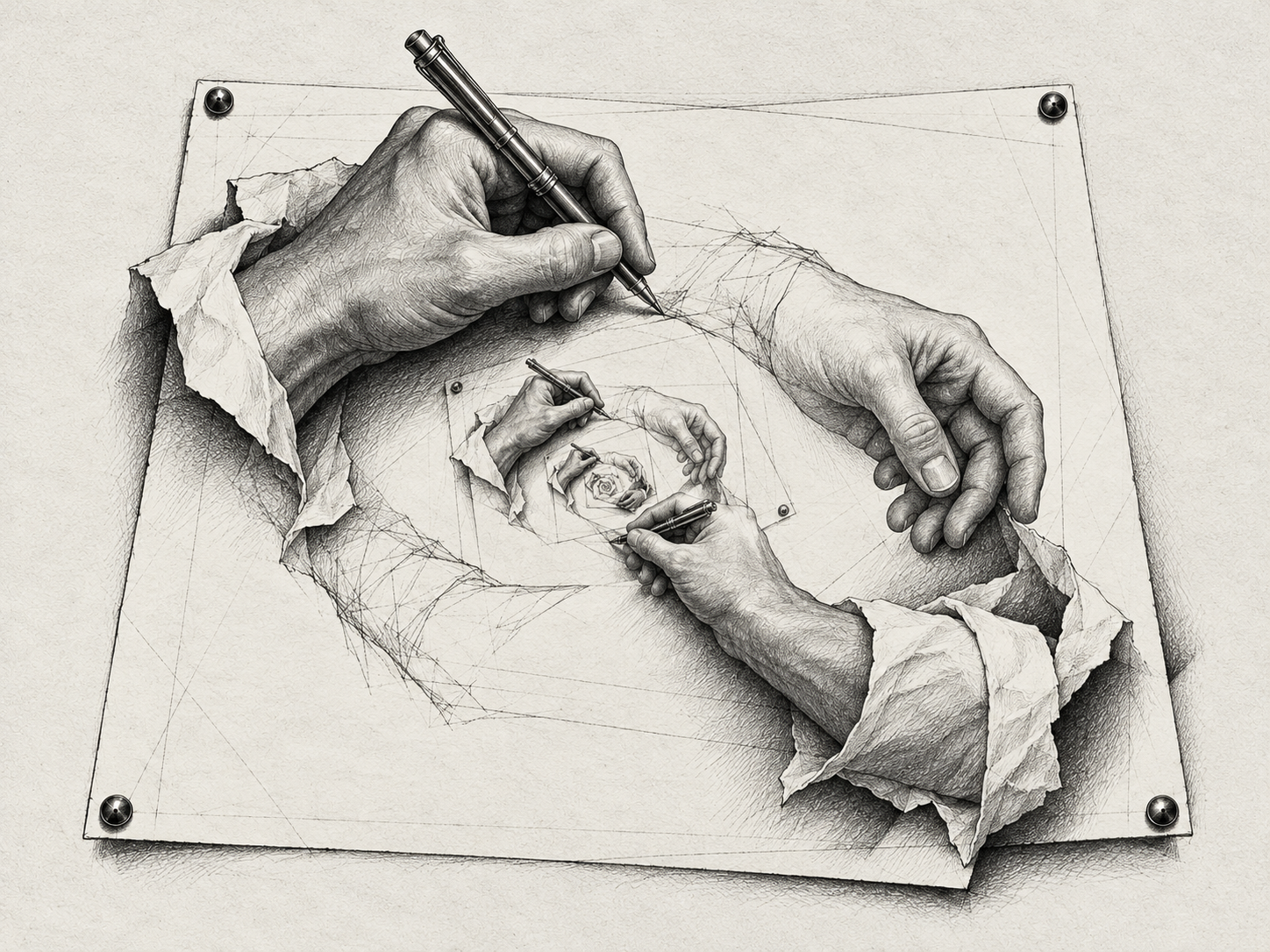
Think about the best student you've ever had. Not just the one who learned fast, but the one who got better at learning itself: they figured out how they study best, refined their note-taking, and each year arrived a little sharper at picking up the next thing.

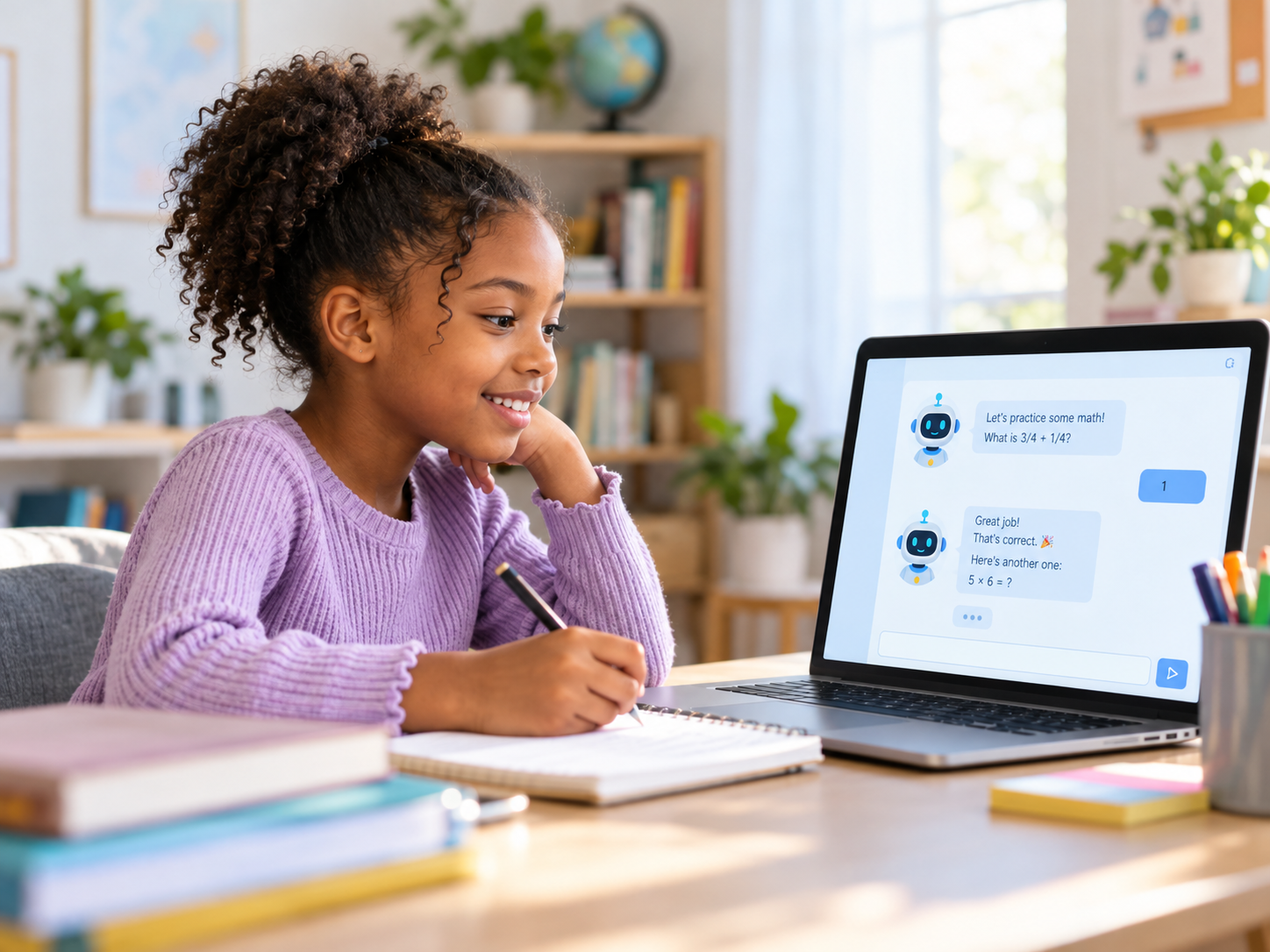
New research suggests the best AI tutors don't do the work for students. They create more chances for students to do it themselves, and catch the mistakes along the way.
The instructional evidence platform for K–12 districts.