When the numbers go up but understanding doesn't, the problem usually isn't the tool — it's the teaching around it.
Picture two students who both used an AI chatbot on last night's assignment. One pasted the prompt, copied the answer, and turned it in. The other argued with the model, asked it to explain its reasoning, caught a mistake, and rewrote the whole thing in her own words. On paper — on the grade — they might look identical. In their heads, something very different happened.
That gap between looking like learning and actually learning is the throughline of two major reports released this winter, and it's the most important idea for teachers to sit with right now.
The first is the OECD's Digital Education Outlook 2026, a sweeping international look at how generative AI is actually being used in classrooms — by students learning content, by teachers and students working together, and by teachers on their own. The second is a comprehensive meta-analysis in Humanities and Social Sciences Communications (part of the Nature portfolio) that pools results from many individual studies comparing AI-driven instruction with traditional approaches. Meta-analyses matter because no single study is the final word; this one tries to find the signal across dozens of them.
Both are worth your attention not because they hype AI or condemn it, but because they're refreshingly specific about when it helps.
The OECD's headline finding is blunt: generative AI can genuinely support learning, but only when it's guided by clear teaching principles. Used without that pedagogical scaffolding, the report warns, outsourcing tasks to AI tends to raise students' measured performance without producing real learning gains. In other words, the worksheet gets done, the score ticks up — and the understanding the worksheet was supposed to build never arrives.
The meta-analysis adds a useful wrinkle that complicates a popular assumption. Many of us reach for "engagement" as a proxy for good learning, and AI tools are often dressed up with games and gamification to make them more fun. But the pooled data suggests that game-layered AI doesn't reliably outperform traditional methods — possibly because the games pull attention toward the game and away from the actual learning task. The forms of AI that did more for outcomes were the less flashy ones focused on direct, systematic knowledge delivery and skill practice. Engagement, it turns out, is not the same as learning either.
A few honest caveats. The OECD report is a synthesis of emerging evidence, not a controlled experiment, and the field is young — both documents note how thin the long-term, large-scale research base still is. The meta-analysis is only as good as the studies feeding into it, and those vary widely in quality and context. Nobody is claiming the last word here. But when an international policy body and an independent meta-analysis land on the same uncomfortable point from different directions, it's worth taking seriously.
Here's the reframe both reports point toward: AI doesn't have a fixed effect on learning. Its effect depends almost entirely on the task we wrap around it. That's actually empowering news for teachers, because the lever is in our hands, not the software's.
Three concrete moves follow from that:
The anxious version of the AI conversation asks, "Will this replace what we do?" These reports suggest a better question: "What do we have to do so that this actually helps?" The answer they keep pointing to is the oldest thing in our profession — thoughtful task design, attention to genuine understanding, a teacher who knows the difference between a student performing and a student learning.
The tools will keep getting better at producing right answers. Our job is to keep getting better at building the kind of learning a right answer can't fake.
This is part of Teaching in the Age of AI, a weekly digest of research and ideas for educators navigating AI in the classroom. Subscribe to get each week's post.
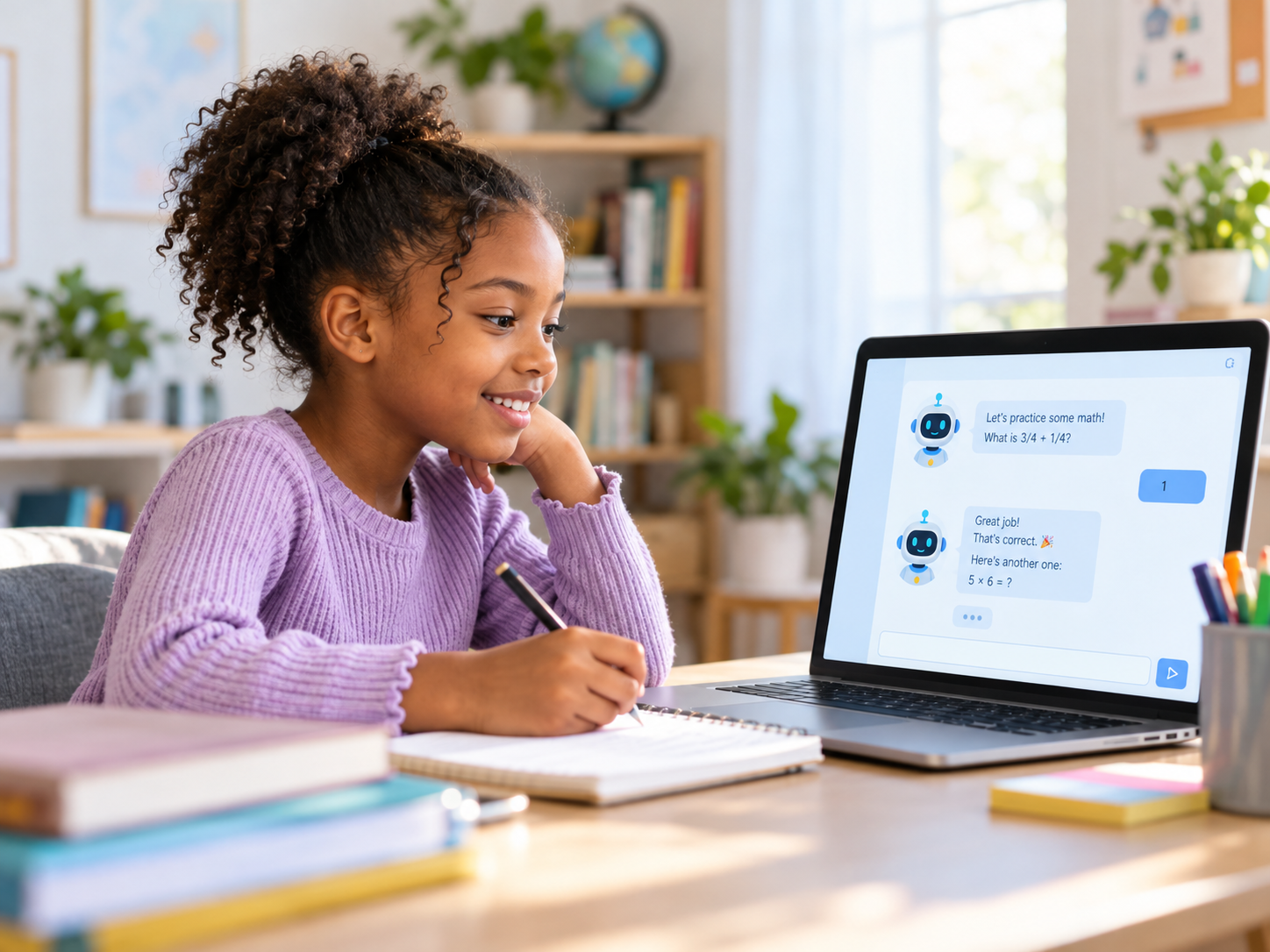
New research suggests the best AI tutors don't do the work for students. They create more chances for students to do it themselves, and catch the mistakes along the way.

The most valuable thing about an AI walkthrough isn't that it's smart. It's that it walked into the classroom with no history, no grudge, and no favorites. Here's how to make that work for you — without ever letting it off the hook.
.jpg)
While AI adoption is widespread in education, relying on AI detectors is failing and fueling an atmosphere of distrust. The deeper threat is "cognitive surrender"—where students lean on chatbots at the first sign of struggle—combined with a massive support gap for teachers who lack adequate guidance. Rather than policing students, the path forward involves focusing on active, observable learning processes, encouraging human connection, and giving educators collaborative tools like Sibme to reflect on and improve their teaching practice.
The instructional evidence platform for K–12 districts.